
Agentic AI Comparison:
Autonomous Field Mapper vs Trinka AI
 vs
vs
Introduction
This report compares Trinka AI, an AI-powered writing assistant for grammar, style, and plagiarism checks, with Autonomous Field Mapper, an AI-driven tool for autonomous agricultural field mapping using robotics and computer vision. The comparison evaluates key metrics on a 1-10 scale based on available data from provided sources.
Overview
Autonomous Field Mapper
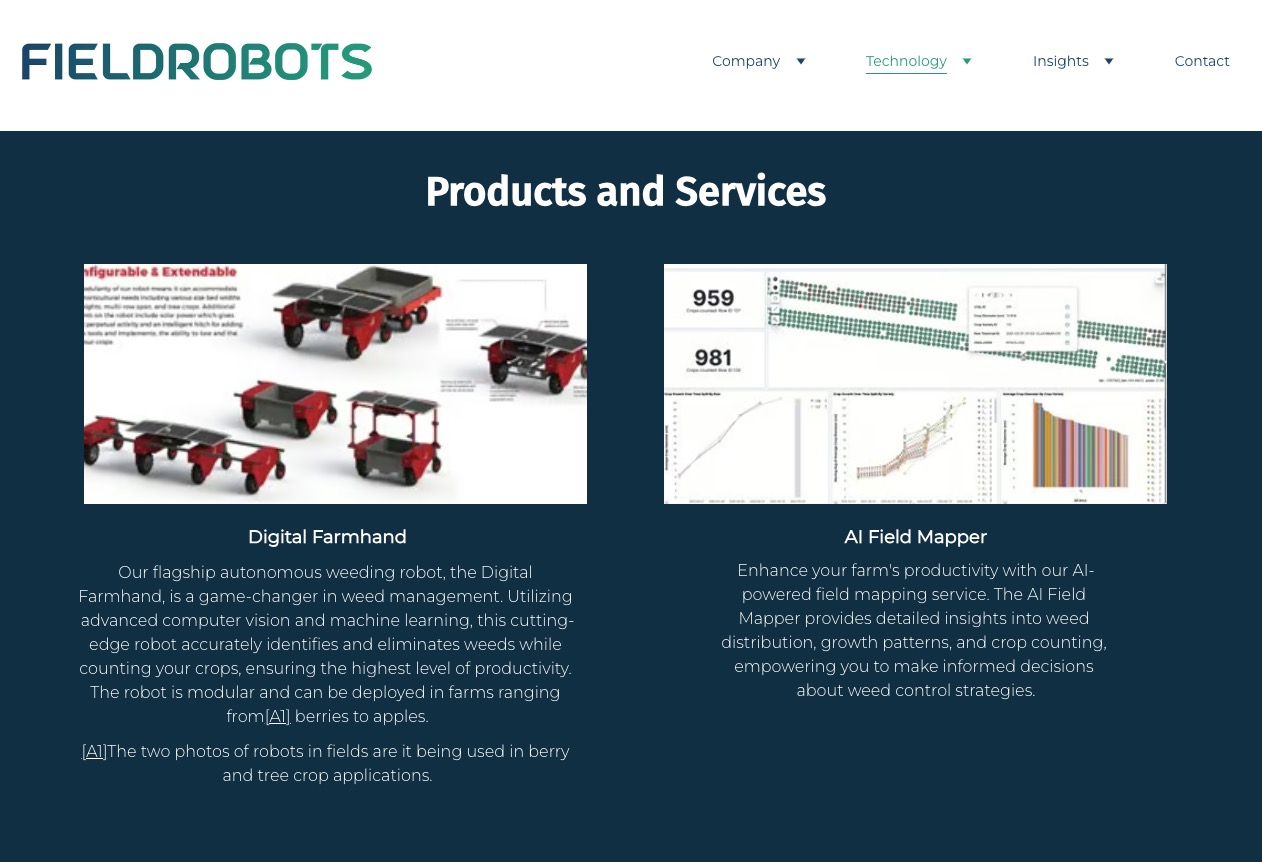
Autonomous Field Mapper is an AI agent that generates precise maps of agricultural fields without human intervention. It employs robotics, computer vision, machine learning, GPS, and sensors to identify crop types, weeds, soil conditions, and boundaries, supporting precision farming and autonomous navigation.
Trinka AI
Trinka AI is an advanced AI writing tool designed to enhance academic and technical writing. It offers grammar correction, style improvements, publication readiness checks, and plagiarism detection, primarily as a web-based or plugin-integrated application for users seeking polished content.
Metrics Comparison
autonomy
Autonomous Field Mapper: 9
Fully autonomous in field mapping, navigation, and feature detection using robotics and AI without human intervention, including real-time updates and obstacle avoidance.
Trinka AI: 4
Operates autonomously for text analysis but requires user input of documents and manual review of suggestions; no independent task execution beyond processing provided content.
Autonomous Field Mapper excels in physical, independent operation, while Trinka AI supports but does not replace human writing workflows.
ease of use
Autonomous Field Mapper: 6
Requires deployment of robotics hardware and sensors on fields; setup involves equipment handling, though software automates mapping post-deployment.
Trinka AI: 9
User-friendly web/app interface with simple upload-and-check workflow, intuitive suggestions, and integrations for common writing platforms.
Trinka AI is more accessible for individual users, whereas Autonomous Field Mapper demands agricultural infrastructure expertise.
flexibility
Autonomous Field Mapper: 7
Tailored for agricultural fields, handling diverse features like crops and weeds, but specialized for farming environments with limited non-agri applicability.
Trinka AI: 8
Adaptable to various writing styles, languages, and domains like technical, medical, and academic content with customizable rules.
Trinka AI offers broader content adaptability; Autonomous Field Mapper is highly flexible within precision agriculture but domain-specific.
cost
Autonomous Field Mapper: 4
Involves high costs for robotics, sensors (e.g., LiDAR, GPS), and integration with tractors/drones; enterprise-level investment for farms.
Trinka AI: 7
Subscription-based pricing (typically affordable for individuals, around $20+/month), with free tiers; no hardware costs.
Trinka AI is far more cost-effective for general use; Autonomous Field Mapper suits large-scale operations with significant upfront expenses.
popularity
Autonomous Field Mapper: 5
Niche presence in precision agriculture; listed in AI agent stores with 86% rating but limited broad recognition outside farming tech.
Trinka AI: 8
Widely adopted in academic, publishing, and professional writing communities, with established affiliate links and integrations indicating strong user base.
Trinka AI has greater mainstream appeal; Autonomous Field Mapper is emerging in specialized agrotech sectors.
Conclusions
Trinka AI outperforms in ease of use, flexibility, cost, and popularity, making it ideal for writing enhancement tasks. Autonomous Field Mapper leads in autonomy for agricultural automation. Selection depends on use case: writing productivity favors Trinka, while field robotics suits Autonomous Field Mapper.